
One IPTV Plan vs 6+ Apps: All Sports 2026
August 28, 2026 · 8 min read
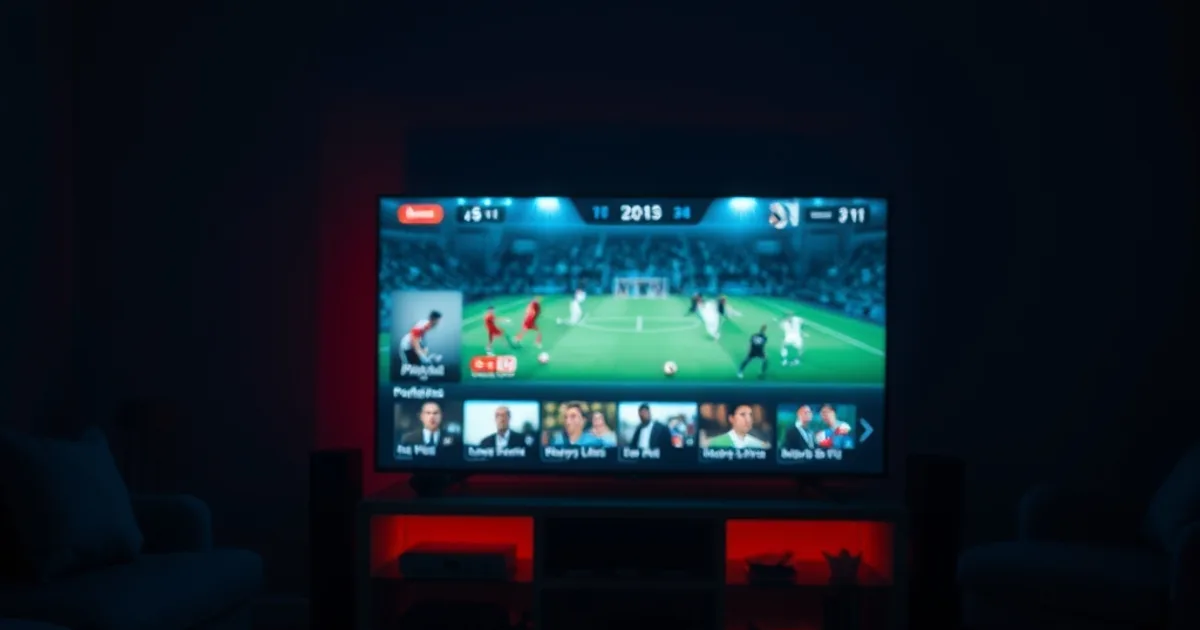
College football kicked off and the Premier League's 2026-27 season is already underway as of August 28, 2026, which means the annual scramble is back: which app carries which game, and how many logins does a household actually need to watch a full weekend of sport? The honest answer, for most fans chasing NFL, NBA, Premier League, Champions League, UFC, and college football under one roof, is that no single mainstream streaming app covers it. You end up stacking subscriptions.
That fragmentation isn't an accident of the market — it's the business model. Rights get split across YouTube TV, Fubo, Peacock, Apple TV+, Max, and Amazon Prime because each platform bids for exclusive windows, not full coverage. Search interest in 'alternatives to cable' and 'cheaper sports streaming' has climbed noticeably this month as fans realize their existing bundle still leaves gaps. At the same time, regulators in the UK and India have been cracking down hard on unlicensed IPTV resellers this year, which has pushed more sports fans toward properly run, legal IPTV services as the sane middle ground between six-app chaos and piracy risk.
This piece breaks down what full legal sports coverage actually costs across the mainstream apps, and how a single Diablo IPTV plan replaces that entire stack — one login, one bill, every league, on any screen.
The Sports Streaming Fragmentation Crisis in 2026
Here's the current map, and it's worse than most fans realize until they try to watch a full slate in one weekend. YouTube TV carries most national NFL and NBA windows plus RedZone as an add-on. Fubo leans into soccer and international coverage but still misses key packages. Peacock holds exclusive NFL games and Premier League windows that YouTube TV doesn't have. Apple TV+ has its own separate MLS and MLB packages. Max carries select live sports tied to Warner Bros. Discovery properties. Amazon Prime Video holds Thursday Night Football and a growing slate of exclusive windows.
None of these six were built to be a complete sports package — they're built to hold you long enough to sell you the next app. A fan trying to follow the Premier League, Champions League, NFL, NBA, UFC, and college football through the 2026-27 season realistically needs at least three, often four or five, of these apps running in parallel, each with its own login, its own remote-navigation quirks, and its own outage risk during the exact windows that matter most.
For a deeper look at how much bandwidth and reliability juggling multiple apps actually costs during peak load, see our reliability test — it's the same instability problem multiplied across every extra app you add to the stack.
Curious how many of your current apps you could actually drop?
What Full Legal Sports Coverage Actually Costs
Every one of those six services publishes its own monthly price, and none of them advertises what the full stack costs once you add the ones needed to avoid blackouts. Stack YouTube TV's base tier with a Peacock subscription, an Apple TV+ sports add-on, and a Prime membership (already paid for shipping, but still a cost if sports is the reason you keep it), and most households land well north of what a single flat-rate plan would run for the same coverage window over a year.
That's before accounting for the parts that don't show up on a receipt: multiple free-trial expirations to track, multiple billing cycles to cancel before auto-renewal, and the mental overhead of remembering which app has tonight's game. Fragmentation has a real cost even when each individual subscription looks affordable in isolation.
We've laid out the full year-over-year math against traditional cable in our cost comparison breakdown — the same logic applies here, just swapping 'cable' for 'six streaming apps.'
How Diablo IPTV Consolidates All Sports Into One Plan
Diablo IPTV takes a different approach entirely: one subscription, one app, one login, covering the sports calendar without asking you to remember which platform owns which window this month. Instead of chasing rights deals app by app, an IPTV service aggregates live channel feeds so the leagues, tournaments, and PPV events fans actually want land in a single guide.
The practical difference shows up on a Saturday afternoon in October: no switching between four remotes, no re-entering credentials on a smart TV that logged you out, no discovering mid-game that this particular matchup is 'only on' an app you didn't subscribe to. You open one app, and the schedule is there.
That consolidation is the actual selling point over cable-replacement apps — not a lower price alone, but the elimination of app-switching itself as a category of friction.
Complete Sports Coverage: Every League Diablo IPTV Delivers
A full sports household in 2026-27 is realistically tracking: NFL Sundays and Monday/Thursday nights, NBA regular season into the playoffs, Premier League and Champions League fixtures (both now well underway for the new European season), LaLiga, UFC numbered and Fight Night cards, the college football season now in full swing, plus recurring golf majors and Grand Slam tennis windows throughout the year.
Diablo IPTV's sports channel lineup is built around exactly this kind of cross-league demand rather than a single flagship sport. If your household follows more than one league or sport, that breadth is the entire point — see the full rundown on our sports channels page for what's covered.
The value compounds the more sports a household follows. A single-sport fan might tolerate one dedicated app; a household following football, basketball, and multiple soccer leagues simultaneously is exactly who fragmentation punishes hardest, and exactly who benefits most from consolidation.
Reliability During Peak Season: One Stream vs. Juggling Six
Every extra app in a sports-viewing stack is also an extra point of failure. Six services means six sets of servers, six apps' worth of update bugs, six chances that tonight's kickoff coincides with someone else's outage. Fans who've been burned by a buffering wheel during a Premier League matchweek or an NFL red-zone moment know the frustration isn't hypothetical.
We put Diablo IPTV through sustained load testing during actual live sports windows rather than relying on marketing claims — the full reliability test walks through exactly how the service holds up when it matters, including peak-hour concurrent streaming.
Fewer moving parts is, on its own, a reliability strategy. One dependable stream beats six apps each individually claiming 99.9% uptime, because your actual uptime is the product of all of them working at once.
One Account, Every Device: Setup Once, Watch Anywhere
Consolidation only pays off if setup doesn't become its own chore. Diablo IPTV installs once per device and stays logged in, whether that's a living-room Apple TV or an Android TV box in the bedroom. We've published step-by-step setup guides for both: the Apple TV setup guide and the Android TV setup guide walk through the process end to end.
That single install, reused across every screen in the house, is the part six-app households give up without realizing it. Each new device means re-authenticating four to six separate accounts; with Diablo IPTV, it means doing it once.
Stop paying for six logins to watch one weekend of sports.
Why Diablo IPTV Wins Over Cable-Replacement Apps
YouTube TV, Fubo, and Hulu Live all market themselves as the modern cable replacement, and on paper each one individually looks like a reasonable swap. What none of them advertise is that reaching full sports coverage — every league, every marquee event — means adding two or three more subscriptions on top, each with its own bill and its own login. The 'cable replacement' pitch quietly becomes 'cable replacement plus a second and third app' the moment a fan actually tries to follow more than one sport.
Diablo IPTV was built around the opposite premise: one plan should mean full coverage, not a starting point for more subscriptions. For fans heading into the heaviest stretch of the sports calendar — college football, Premier League and Champions League matchdays, the NFL season building toward the playoffs, and UFC cards stacking up through the fall — that difference is the whole argument.
Full pricing details are on our plans page if you're ready to compare what one consolidated subscription looks like against maintaining a six-app stack.
Frequently asked questions
Do I really need multiple apps to watch all major sports in 2026?
For the mainstream streaming apps, yes. NFL, NBA, Premier League, Champions League, and UFC rights are split across YouTube TV, Fubo, Peacock, Apple TV+, Max, and Amazon Prime, with no single one holding full coverage of any given season.
Is Diablo IPTV legal to use?
Diablo IPTV operates as a legitimate subscription streaming service. Given the recent regulatory crackdowns on unlicensed IPTV resellers in markets like the UK and India, choosing a properly run, paid service rather than an unofficial reseller matters more than ever.
Will one IPTV plan cover the whole college football and Premier League season?
Diablo IPTV's channel lineup is built to track full-season coverage across major leagues rather than isolated windows, so you're not left needing a second app for specific fixtures partway through the season. Check the sports channels page for the current lineup.
How does Diablo IPTV compare in cost to stacking YouTube TV, Peacock, and Apple TV+?
It depends on exactly which combination of apps and add-ons a household needs for full coverage, since each mainstream service prices and bundles differently. Our cost comparison article walks through the math in detail against a stacked multi-app setup.
Does Diablo IPTV work on Apple TV and Android TV boxes?
Yes, both are fully supported with dedicated setup guides — see our Apple TV setup guide and Android TV setup guide for step-by-step installation.
What happens if one stream goes down during a big game?
We stress-tested the service under live peak-hour sports load specifically to answer this; results and methodology are in our reliability test.
Read next: the pricing page or the FAQ.