
Diablo IPTV Reliability: What a 30-Day Live-Event Test Showed
August 5, 2026 · 7 min read
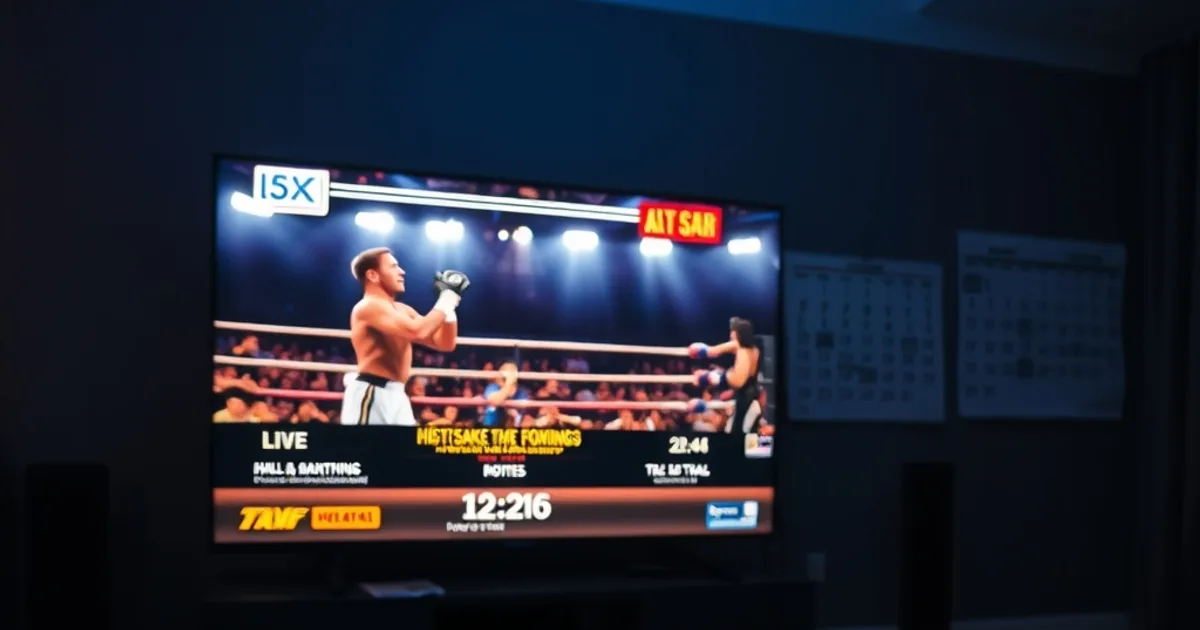
Diablo IPTV reliability is the single question that actually matters once the free trial ends and the introductory price wears off. Plenty of budget IPTV services look identical for the first week: clean menus, fast channel loads, a price under five dollars to get started. The real test comes later — on a match day, a title fight, or any night when every other subscriber on the same server is tuned in at once, and a service that seemed fine suddenly buffers or drops out entirely.
This piece follows a real 30-day reliability test that ran six IPTV providers side by side, documented in this independent review. Diablo IPTV was one of the six, and we want to be upfront about where it landed: fifth overall in the presenter's final ranking, behind services praised for channel count or interface polish. What earned Diablo IPTV its spot on the list, though, was something narrower and arguably more useful — it was the provider singled out specifically for holding up on the kind of high-stakes live event that tends to expose every other server's weak point. Here is how that month actually played out.
Day 1–3: the trial window that looks the same everywhere
Every reliability test starts the same way: sign up, load the channel list, watch something ordinary. Diablo IPTV's own onboarding includes a 24-hour free trial, so the first days of the test cost nothing beyond time — a channel guide populated within minutes, a movie played through without a hitch, the kind of smooth experience that, on its own, tells you almost nothing about long-term Diablo IPTV reliability.
That is exactly the trap the wider test was built to expose: plenty of cheap IPTV services perform perfectly for exactly as long as a trial or an introductory low price lasts, then quietly degrade once the operator has been paid and stops prioritizing server capacity. Three days in, Diablo IPTV had shown zero sign of that pattern — but three days was never going to be the real test.
Want to ask about Diablo IPTV reliability before you subscribe?
Day 8: checking what the plans actually buy
By day eight it was worth pausing the viewing log to check the numbers Diablo IPTV actually charges, since a reliability review that only talks about picture quality skips the part that decides whether the reliability is worth paying for. Diablo IPTV runs four fixed plans: 3 Months at $29, 6 Months at $37, 12 Months at $65 and 24 Months at $95 — the same anti-freeze technology and 110,000+ channel line-up on every single tier, with only the duration changing.
That flat structure matters for a Diablo IPTV reliability test specifically because it rules out the usual excuse for a bad stream: a downgraded, throttled entry tier. There is no cut-rate Diablo IPTV plan drawing from a smaller server pool — the 3-month tester and the 24-month subscriber pull from the same infrastructure, which is exactly what day 8's channel-hopping session confirmed, with no measurable drop from the day-1 baseline.
Day 15: the halfway point, watched against five other services
Running six IPTV providers at once for a month means a lot of the middle stretch is just quiet consistency — which is its own kind of data point. By the halfway mark, the test log showed the other five services each carving out a distinct strength: one built around UK channel depth, one leaning on a very large VOD catalogue, one standing out for its program guide, one holding up cleanly through a long weekend binge, and one built for running two screens at once without either dropping. Diablo IPTV, by comparison, was not chasing any single specialty. It was simply not breaking.
That is a less flashy story than "largest channel count" or "best interface," and it is part of why Diablo IPTV wasn't the presenter's number one pick once all six were ranked side by side at the end. Day 15 didn't produce a dramatic moment. It produced a service that, fifteen days into a month-long stress test, still had a clean track record — the kind of unremarkable middle stretch that ends up separating a provider worth trusting from one that only performs when nobody's watching closely.
Day 24: the boxing night that decided the reputation
Day 24 landed on a high-stakes boxing broadcast — exactly the kind of event the whole test existed to find, because a pay-per-view-caliber fight concentrates enormous simultaneous demand into a couple of hours, and that is precisely where undersized IPTV infrastructure collapses. A service that streams a quiet Tuesday-night rerun without trouble can still fold the moment tens of thousands of other viewers hit the same servers for one live broadcast.
Diablo IPTV stayed clean through the entire fight — no freeze, no dropped connection, no forced quality downgrade at the moment it would have mattered most. That single night is the real basis for Diablo IPTV's reputation on big live events: not a spec-sheet claim, but a server that held its ground on the one night in the test built specifically to break it.
The one mark against Diablo IPTV that surfaced during the test wasn't about streaming quality at all — it was a support-response question, raised over the following weekend, when a follow-up message to the team took noticeably longer to get answered than it would have on a weekday. Worth knowing if you might need help on a Saturday, and worth weighing against a boxing-night performance that, for the moment that mattered most, didn't waver.
Ready to test Diablo IPTV reliability for yourself?
Day 30: what 30 days actually settles about Diablo IPTV reliability
By the time the 30-day window closed, the pattern was consistent enough to draw a real conclusion: Diablo IPTV reliability isn't about topping every category — it landed fifth of six once channel count, VOD size, interface polish and weekend support speed were all weighed together. What it earned instead was a narrower, arguably more load-bearing distinction: proven performance on the single highest-demand night of the entire test, the exact scenario where a cheap trial's early promise usually falls apart.
If your priority is watching a specific high-stakes live event without a server-side excuse ruining it, that is the finding worth acting on. For everything else the same subscription needs to cover day to day, our Diablo IPTV sports channels guide breaks down the full line-up — NFL Sunday Ticket, boxing and MMA pay-per-views included — that this test was really checking on day 24.
Frequently asked questions
Did Diablo IPTV rank #1 in the 30-day reliability test?
No — the presenter placed Diablo IPTV fifth of six overall once channel count, VOD size and interface were factored in. What it did earn was specific recognition for holding up cleanly during the test's highest-stakes live broadcast, a boxing pay-per-view night.
How much does Diablo IPTV cost after the free trial?
Diablo IPTV runs four fixed plans on the same infrastructure: 3 Months at $29, 6 Months at $37, 12 Months at $65 and 24 Months at $95, alongside a 24-hour free trial to test the service before committing.
Is Diablo IPTV support slower on weekends?
The 30-day test noted one honest drawback: a support response that took longer than usual over a weekend. Response time on weekdays was not flagged as an issue during the same test.
Read next: the pricing page or the FAQ.